Welcome to the blog! This is the place where you can cozy up and read about all things love, stories of our happy clients, tips on working with a wedding planner, wedding trends and inspiration, our favorite resources for throwing the perfect event, and much more!
explore
Welcome to our
home on the web
Real Weddings
Tips
personal
A Planner’s Guide to Hosting a Wedding at Home
Thinking about hosting a private residence or home wedding in Houston? Learn the real costs, logistics, and planning considerations, plus why an experienced planner makes all the difference.
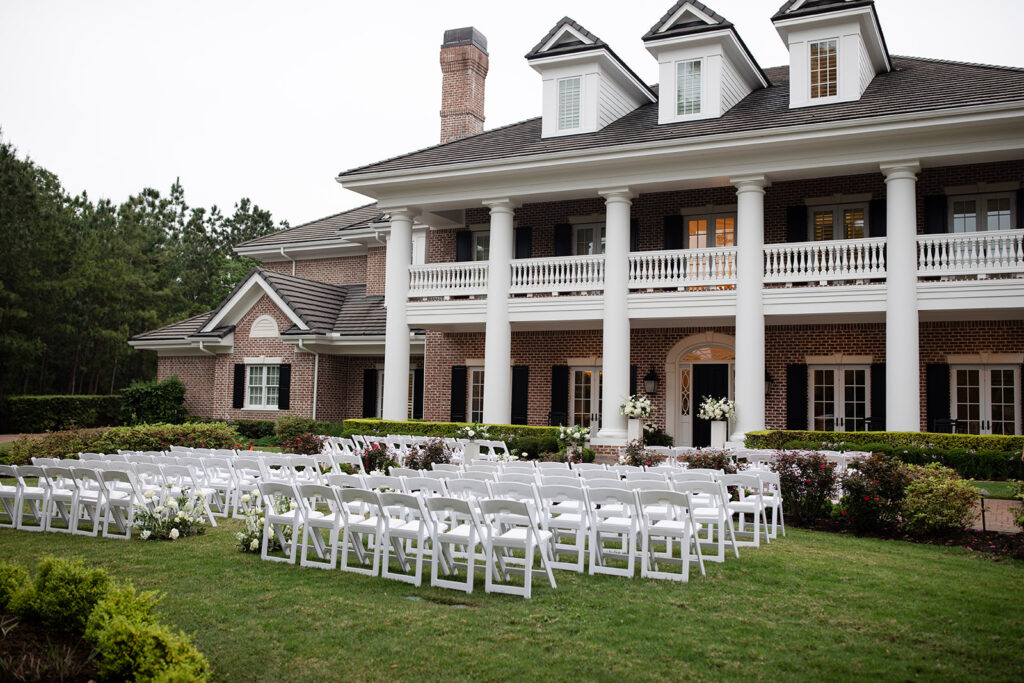
Hosting a wedding at home or at a private residence can feel deeply meaningful. It’s personal, familiar, and often tied to family history or the desire to create an experience that feels truly your own.
But while private residence weddings are beautiful, they are also layered, complex, and often misunderstood. Before committing to hosting a wedding at home, it’s important to understand what’s involved—logistically, emotionally, and financially.
Thinking About Hosting a Private Residence Wedding at Home? Here’s What to Consider First
We’ve seen firsthand how meaningful a wedding at home or at a private residence can be, how personal it feels, how special it is to gather loved ones in a space that already holds memories. I’ve also seen how quickly these celebrations can become overwhelming without the right planning support in place.
A private residence wedding is not just a wedding—it’s a temporary event venue built from the ground up.
That means every element that would normally exist at a traditional venue must be thoughtfully planned, sourced, and managed.
The intention of this guide is to help you step into the planning process with clarity, realistic expectations, and confidence so you can decide whether hosting a wedding at home is the right fit before the logistics take over.
The Real Costs of Hosting a Wedding at Home
One of the biggest misconceptions is that hosting a wedding at home automatically saves money.
While there may be no venue fee, private residence weddings often require additional rentals and services, such as:
- Tents, flooring, and climate control
- Restroom trailers (for guests and vendors)
- Generators, power distribution, and lighting
- Tables, chairs, linens, and specialty rentals
- Parking coordination or shuttle transportation
- Infrastructure Matters More Than Couples Expect
Behind every seamless private residence wedding is a carefully coordinated infrastructure plan, one that most couples never see, but absolutely feel.
When you host a wedding at a traditional venue, much of the heavy lifting is already done. At a private residence, those systems don’t exist yet. They must be intentionally created to support your guest count, vendor team, and vision for the day.
This behind-the-scenes planning is what allows a wedding at home to feel effortless instead of chaotic.
Water Supply & Utilities
Water access is one of the first things experienced planners and catering teams assess when evaluating a private residence.
Caterers rely on water not just for cooking, but for food safety, dishwashing, sanitation, and cleanup. In some cases, a home’s existing plumbing simply isn’t designed to support event-level usage for dozens—or hundreds—of people at once.
Depending on the property, this may require:
- Careful coordination with the catering team
- Temporary water solutions
- Adjustments to protect the home’s plumbing and septic systems
Building a Kitchen for Your Catering Team
One of the biggest misconceptions couples have when hosting a private residence wedding is assuming their home kitchen will be used for wedding catering.
In reality, most professional caterers do not cook out of the home kitchen. Instead, depending on the property, guest count, and catering company, a fully separate, temporary kitchen is often built specifically for the event.
This kitchen is designed to support efficiency, food safety, and service flow—and may include:
- A dedicated catering tent or enclosed structure
- Flooring to create a safe, level workspace
- Professional-grade lighting
- Power distribution and generators
- Ovens, fryers, warmers, and other cooking equipment
- Prep tables, refrigeration, and storage
- Designated water access and waste management
While this level of setup can surprise couples, it allows the catering team to work safely and professionally without disrupting the home—or the guest experience.
A planner’s role is to help couples understand that this isn’t “extra.” It’s what makes elevated service possible in a non-venue setting.
Restroom Planning for Private Residence Weddings
Restrooms are one of the most important—and most underestimated—logistical considerations when hosting a wedding at a private residence.
For guest comfort alone, most homes are not designed to accommodate dozens or hundreds of people using indoor bathrooms throughout a multi-hour event. That’s why restroom trailers are often brought in to support guest flow, reduce wait times, and protect the home itself.
In addition to guest restrooms, depending on the size of your event and the vendor team involved, it may also be necessary to provide separate restroom facilities for vendors, particularly your catering team and band members. Catering professionals are onsite for long hours and need convenient access that doesn’t interfere with guest spaces or service flow.
Being Comfortable With Access to Your Home
Hosting a wedding at home means being comfortable with a level of access that doesn’t exist at a traditional venue.
This may include:
- Vendors needing entry to certain areas of the home
- Guests naturally exploring the property
- Setup and breakdown happening near personal spaces
None of this is inherently negative—but it does require thoughtful boundaries and proactive planning.
An experienced planner helps determine:
- Which spaces remain private
- How traffic flows throughout the day
- How to protect meaningful or sensitive areas of the home



The End of the Night Looks Different at Home
One of the most special parts of hosting a wedding at home is that when the celebration ends, you’re already there. There’s no hotel shuttle, no late-night drive—just the quiet comfort of being home.
That said, it’s important to understand that while guests may depart, vendors typically remain onsite for one to two additional hours handling cleanup, breakdown, and load-out.
Preparing couples for this reality—both logistically and emotionally—is an important part of the planning process.
Guest Experience Is the Priority
Every decision made when planning a private residence wedding affects how guests feel.
Parking, lighting, restroom placement, walkways, signage, and sound all contribute to whether guests feel comfortable, welcomed, and cared for.
The most successful private residence weddings are those where guest experience is treated as a non-negotiable priority, not an afterthought.
Private residence weddings require a planner who knows how to:
- Create a venue where none exists
- Coordinate large, layered vendor teams
- Anticipate challenges before they arise
- Protect both the home and the guest experience
- Support families so they can be fully present
This level of planning isn’t about control—it’s about care, foresight, and advocacy.


Ready to Talk Through Your Private Residence Wedding?
Hosting a wedding at home or on a private residence can be incredibly meaningful—but it’s also one of the most complex types of weddings to plan well. The difference between a beautiful, calm experience and an overwhelming one often comes down to early guidance, realistic planning, and the right support team.
If you’re considering a private residence or home wedding in Houston, we’d love to help you think through what’s possible, what’s required, and what will best support you, your family, and your guests.
Whether you’re still exploring the idea or already committed to hosting at home, a conversation early in the process can bring clarity, direction, and peace of mind.
- 👉 Inquire here to learn more about private residence wedding planning in Houston.
Private residence weddings are at their best when they’re planned intentionally—and supported by someone who knows how to build the experience from the ground up.